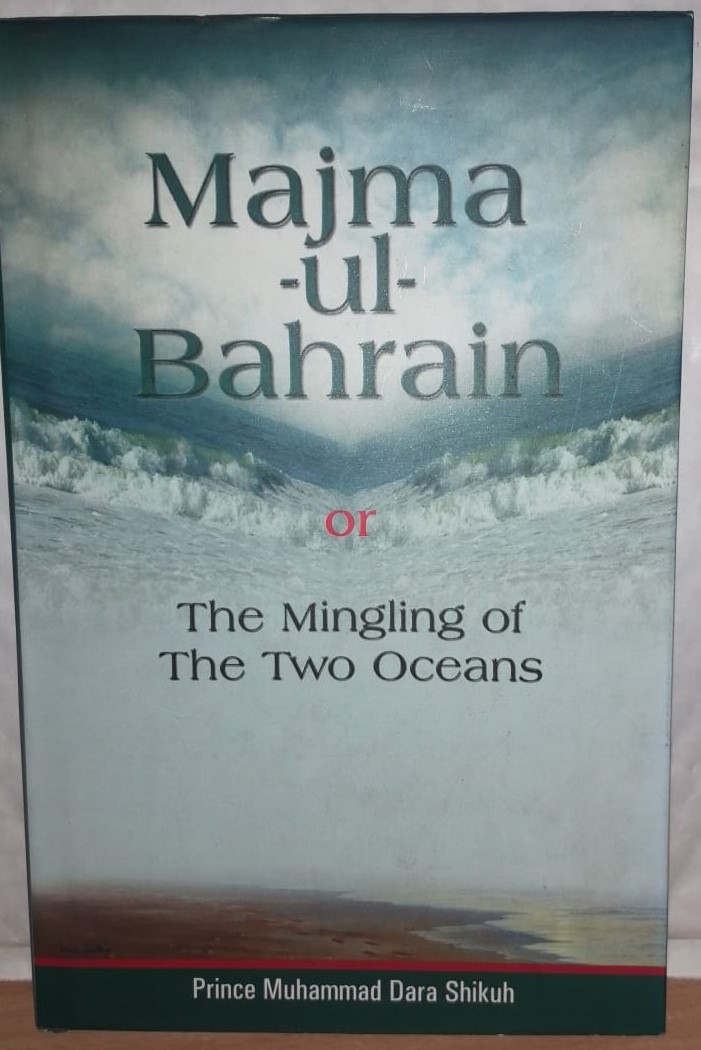
Majma Ul Bahrain: The Mingling Of The Two Oceans
R90,00
Description
Majma’ul-Bahrain is evidence of the fact that the spirit of eclecticism, powerfully expressed by Prince Dara Shikuh in this work, is still appreciated by those historians, religious persons and intellectuals who believe in religious harmony. Dara Shikuh, who was born in Ajmer in 1024 A.H., was certainly influenced by Mu’in-ud-din Chisti, the great mystic saint, whose tomb is situated in Ajmir. In “Introduction”, M. Mahfuz-ul-Haq gives a good account of Dara Shikuh’s life and times which has considerable historical importance the Prince himself was a notable intellectual. He was the author of ten dissertations and four tracts. He was also a poet of considerable merit. Dara Shikuh appreciated the arts, and he was himself a calligrapher. A large number of books were written at his request by numerous author, one of whom was Babalal Mandiya, who was a Hindu. In Majma’-ul-Bahrain the Prince mentions a Hindu saint named Baba Lal Bairagi, who was a Vaisnava, and whom the Prince admired. There is no doubt about the fact that Dara Shikuh was well-acquainted with the ideology of the Nirguna Saints like Kabir, Pipa, Namdev and other sages who repudiated communalism and propagated religious harmony in a plural society. The Yogavasista was translated into Persian language at the instruction of the Prince. Dara was initially influenced by Sufism. Later he appreciated the Nirguna Sant-tradition, and in particular, such ancient works as the Yogavasista and the Upanisads, and the Gospels and the Pentateuch.
This is the context of Majma’-ul-Bahrai, in which a philosophical approach to the necessity of religious harmony is found. The work is the evidence of a highly cultured mind, and a culmination of the religious liberalism of Akbar the Great. Prince Dara had not renounced Muhammadanism. He was not a heretic. But like Akbar, he felt the necessity of maintaining communal harmony in a plural society, for which he was killed by his fanatical younger brother Aurangzib.
Majma’-ul-Bahrain is a brilliant manifesto of harmony and has, therefore, considerable historical and theological interest.